
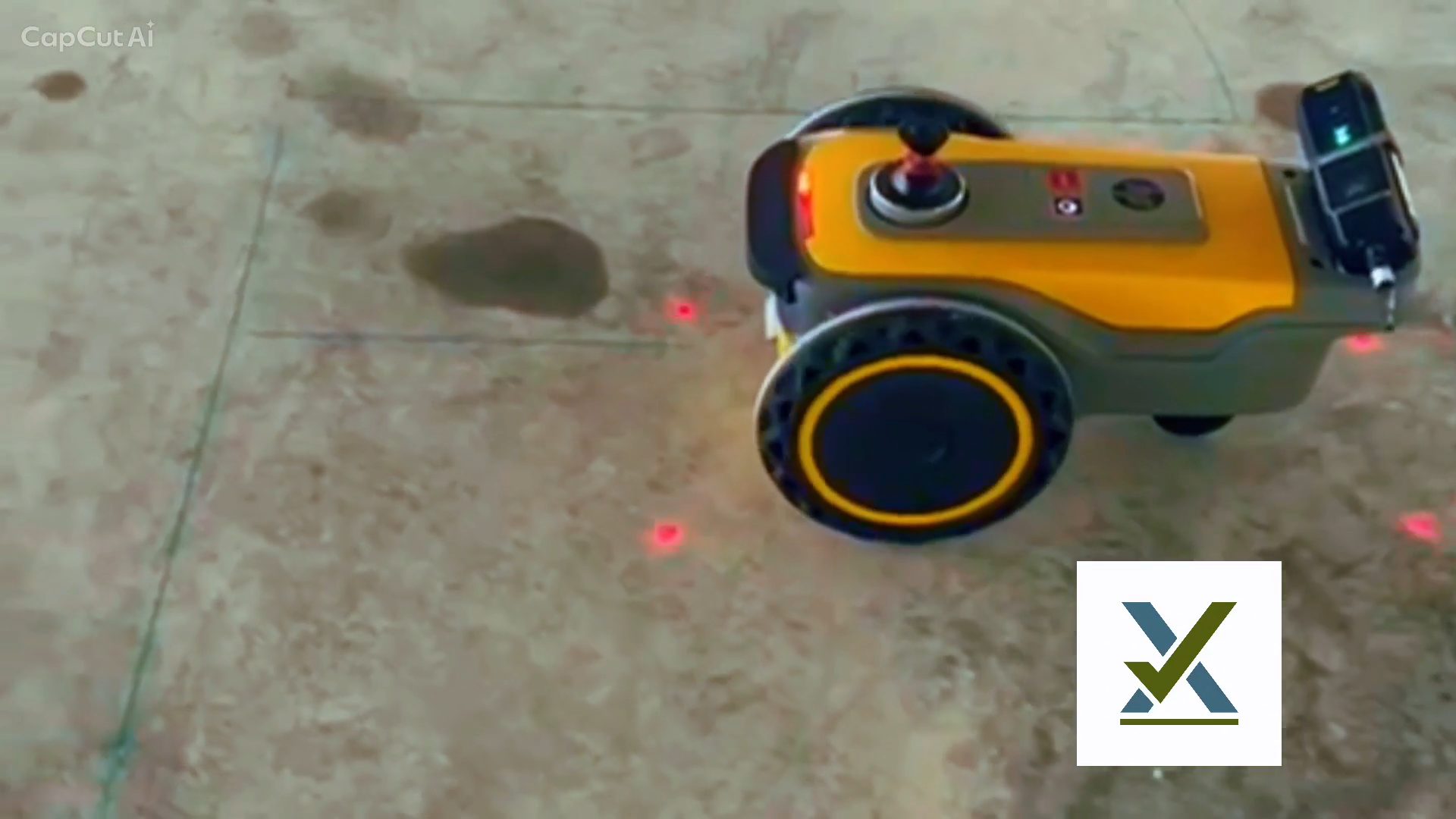
The use of robotic layout printers is an emerging technology that can significantly improve accuracy, productivity, and quality control in construction projects. These systems use digital drawings and robotic technology to transfer building layouts directly onto the construction surface.
Advantages
- 01
Reduces rework
One of the main advantages of robotic layout printers is their ability to reduce construction errors and rework. By printing the layout directly from coordinated digital drawings, the risk of human measurement and layout errors is significantly reduced.
- 02
Accurate location of sleeves, boxes, and penetrations
Robotic printing can help ensure the correct location of MEP sleeves, electrical boxes, plumbing penetrations, and other openings before concrete is poured. This can prevent costly modifications after the slab has been cast. Incorrectly located sleeves or penetrations can result in coring, cutting, patching, additional labour, and delays. Accurate robotic layout can help avoid these problems from the beginning.
- 03
Correct location of columns and walls
Another important benefit is the accurate positioning of columns, walls, partitions, and other structural or architectural elements. Once the concrete slab has been poured, having the correct layout printed on the floor provides the construction team with a reliable reference for continuing the work. This can help prevent situations where walls or columns are constructed in the wrong location and later have to be demolished and rebuilt.
- 04
Improved accuracy and consistency
Unlike traditional manual layout methods, robotic printers can reproduce digital coordinates with a high level of consistency. This is particularly valuable on large and complex projects where numerous trades depend on accurate layout information.
- 05
Better coordination between design and construction
Robotic layout creates a direct connection between the BIM/CAD model and field execution. When properly coordinated, the information contained in the digital model can be transferred directly to the construction site, reducing the possibility of errors caused by manually interpreting drawings.
- 06
Potential productivity improvements
Although the initial investment can be significant, robotic layout technology has the potential to reduce the amount of time required for repetitive layout activities. It can also allow skilled layout personnel to focus on more complex tasks, quality control, coordination, and verification.
Disadvantages
- 01
Requires trained personnel
The technology still requires qualified personnel who understand CAD, construction drawings, coordinates, and digital construction workflows. Someone must prepare, verify, and export the appropriate CAD or BIM information before it can be used by the robotic printer. If the digital model contains errors, the robot can reproduce those errors accurately.
- 02
High equipment and consumable costs
The initial cost of acquiring robotic printing equipment can be high compared with traditional layout methods. In addition to the equipment itself, there are costs associated with printing materials, maintenance, software, training, calibration, and technical support. Therefore, the financial benefit must be evaluated based on the size, complexity, and duration of the project.
- 03
Limited availability of options
The market for robotic construction printers is still relatively limited. There are fewer manufacturers and equipment options compared with traditional surveying and layout equipment. This limited competition can make the technology more expensive and may also create challenges related to availability, technical support, spare parts, and local service.
- 04
Dependence on accurate digital information
Robotic printers are only as reliable as the information provided to them. Any errors in the architectural, structural, or MEP drawings can be transferred directly to the construction site. For this reason, drawing coordination and quality control are essential before sending information to the robot.
- 05
Site conditions can affect performance
Construction sites are constantly changing environments. Dust, debris, uneven surfaces, poor lighting, obstacles, other trades, and changing site conditions can affect the efficiency of robotic layout systems. The robot therefore does not completely eliminate the need for field supervision and verification.
Conclusion
Robotic layout printers have significant potential to improve construction accuracy and reduce rework. Their greatest value is not simply in replacing manual layout, but in creating a more reliable connection between digital design information and actual field construction.
The technology can help prevent incorrectly located sleeves, boxes, penetrations, columns, and walls, potentially saving significant labour, material, and schedule costs.
However, successful implementation requires trained personnel, accurate CAD/BIM information, proper coordination, and an initial investment in equipment and consumables. As the technology develops and more manufacturers enter the market, costs and availability may improve.
For large and complex construction projects, the benefits of robotic layout can outweigh the disadvantages, particularly when the cost of rework, delays, and construction errors is considered.